A generator quotation should tell you what you are buying and where the supplier's responsibility ends. If two offers leave those details unclear, a lower total does not tell you much.
Send each supplier the same requirements: intended use, operating hours, load list, voltage, frequency, enclosure and quantity. Then ask for a written configuration. You can compare different equipment, but you need to know which differences you are paying for.
The checks below work across power ratings. For a specific size example, our 100 kVA buying guide shows two catalogue configurations.
1. Get the engine model, not just the brand
“Weichai-powered” or “Cummins-powered” identifies the engine brand. It does not identify the complete generator or the exact engine fitted.
Ask for the model code and the engine's rated mechanical power and speed. Check that the model on the quotation matches the proposed datasheet. Engine power and the generator's electrical output are separate figures; the supplier should confirm the complete set's rating.
Conventional four-pole synchronous sets run at 1500 rpm for 50 Hz and 1800 rpm for 60 Hz. Other configurations exist, so use the data for the actual equipment being offered.
2. Identify the alternator
Record the alternator brand, model, rated output and winding material. If the quote only says “copper alternator,” ask for the missing identification.
Brand alone does not establish motor-starting performance or suitability for your loads. Pumps, compressors and other motors may need a closer check of starting current and the proposed alternator's capability. Send the equipment nameplates and starting method; our motor-starting guide explains what information helps.
If a particular component is important to your purchase, put its exact model in the agreed specification rather than relying on a catalogue photograph.
3. List the controller and included accessories
Ask which controller model is included and what functions it supports. “SmartGen controller,” for example, gives a brand but still leaves the model unspecified.
Check the breaker rating and whether the battery, charger, jacket water heater and other requested items are included. Some may be optional or unnecessary for your site. What matters is that each quote states its scope clearly.
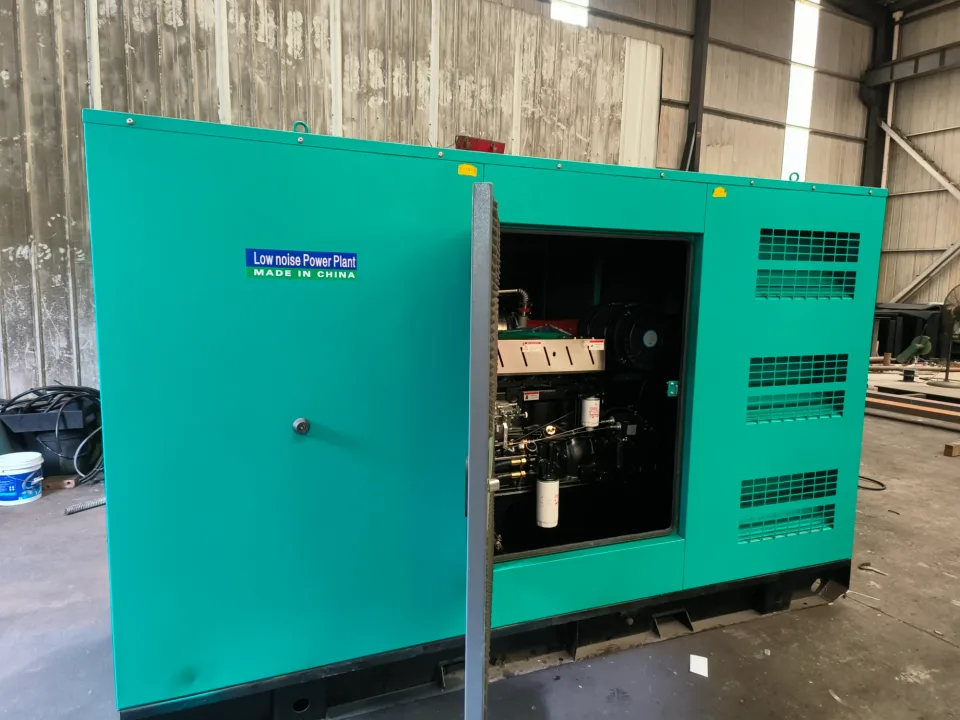
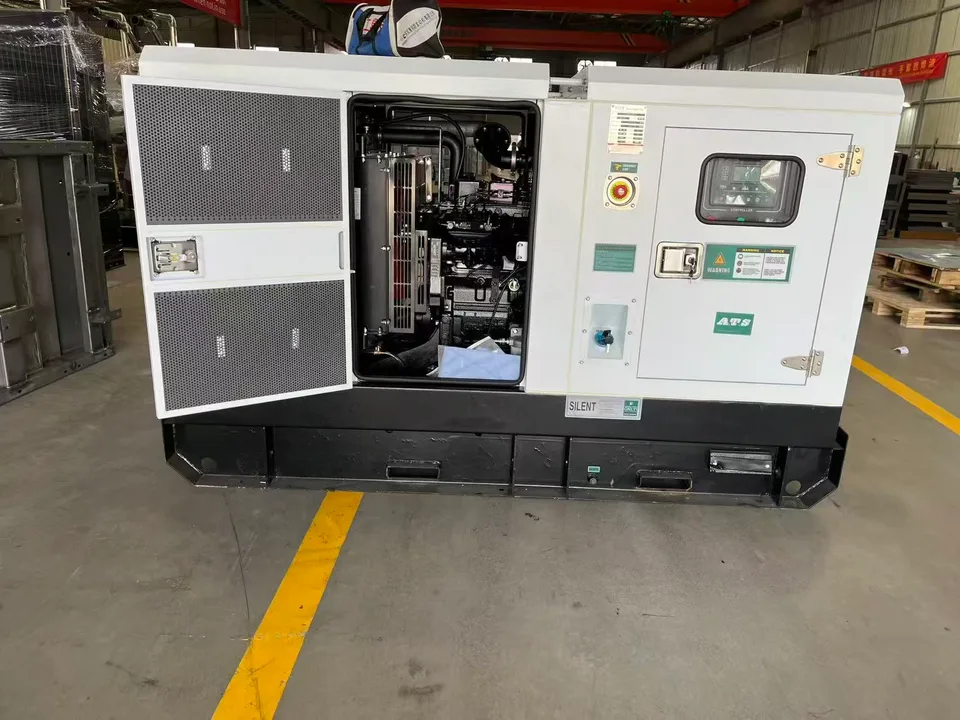
For a unit already built, a photograph of the fitted controller and identification plates can help you check the written offer.
4. Compare the same power-rating category
A quotation needs both kVA and kW, the rated power factor, and the operating duty behind those figures. A standby number should not be used as proof of suitability for regular, long-hour operation.
ISO 8528 includes prime power (PRP), emergency standby power (ESP), limited-time running power (LTP) and continuous power (COP). These categories have different operating conditions. Ask the manufacturer which category applies to its quoted rating; do not assume every supplier uses “standby” in exactly the same way.
At a rated power factor of 0.8, 100 kVA corresponds to 80 kW within the stated category. That calculation does not turn a standby rating into a prime rating. The same machine may have more than one rating for different duties.
Tell the supplier your expected hours, load pattern, ambient temperature and altitude. Read Prime vs Standby and kW, kVA and power factor if either figure is unclear.
5. Confirm the site's electrical requirements
Write the voltage, frequency and number of phases into the quotation. A destination country is useful background, but the site's electrical requirements and equipment nameplates are more specific.
For a frequency change, the engine speed, alternator, voltage regulation, controls and resulting ratings must be reviewed and confirmed by the manufacturer. Do not assume a 50 Hz quotation also covers 60 Hz at the same output.
See our voltage and phase guide and 50 Hz/60 Hz notes.
6. Check the canopy and ATS scope
Compare open-frame and sound-attenuated offers separately. If noise matters, request the measurement distance, load and test conditions behind the quoted figure.
An automatic-start controller does not, by itself, mean an automatic transfer switch is included. Ask for the ATS brand and rating, and confirm who supplies the cabling, protection and installation.
Also check the fuel tank, exhaust silencer and loose accessories. Our ATS guide covers the transfer questions to settle before ordering.
7. Put the EXW collection point in writing
ZHONGCHAI's written quotations use EXW. The quotation should name the precise collection location and state “Incoterms 2020.”
Under EXW, delivery takes place when the goods are placed at the buyer's disposal at the agreed location, not loaded onto the collecting vehicle. The buyer arranges loading, export clearance and onward transport. If the seller will help with loading or documents, agree the details separately.
Confirm the packing included in the price, packed dimensions and weight, collection arrangements and documents your forwarder needs. “Export packing” should not leave you guessing about wooden protection or other preparation.
Our Africa shipping guide and Kenya import notes provide further checks.
Keep the commercial terms beside the equipment details
Record currency, payment terms, production lead time, warranty coverage and exclusions. Separate cargo readiness from estimated arrival at your destination.
Before shipment, agree the unit-specific inspection and test records, including test conditions and measured results. Photographs document the equipment and progress; they do not replace a load-test report.
For reference, the Kenya 150 kVA Ricardo case covers recorded production, testing and dispatch stages. The Kenya repeat-purchase case concerns used equipment. Neither establishes the configuration or condition of a different order.
A comparison sheet you can reuse
Create a column for each supplier and fill these rows:
- Engine brand, model, rated mechanical power and speed.
- Alternator identification, rated output and winding material.
- Controller, breaker and included accessories.
- Manufacturer-confirmed rating category, kVA, kW and rated PF.
- Voltage, frequency and phases.
- Enclosure, noise conditions and ATS scope.
- Trade term, named location, packing and collection responsibilities.
- Currency, payment, lead time, warranty and exclusions.
Mark unanswered points as “not confirmed” and send the missing rows back to the supplier. You can then decide whether a price difference buys something useful for your project.
Send ZHONGCHAI your load list or required power, voltage, frequency, quantity and delivery requirements to discuss a written quotation. You can also browse the published models before contacting us.